
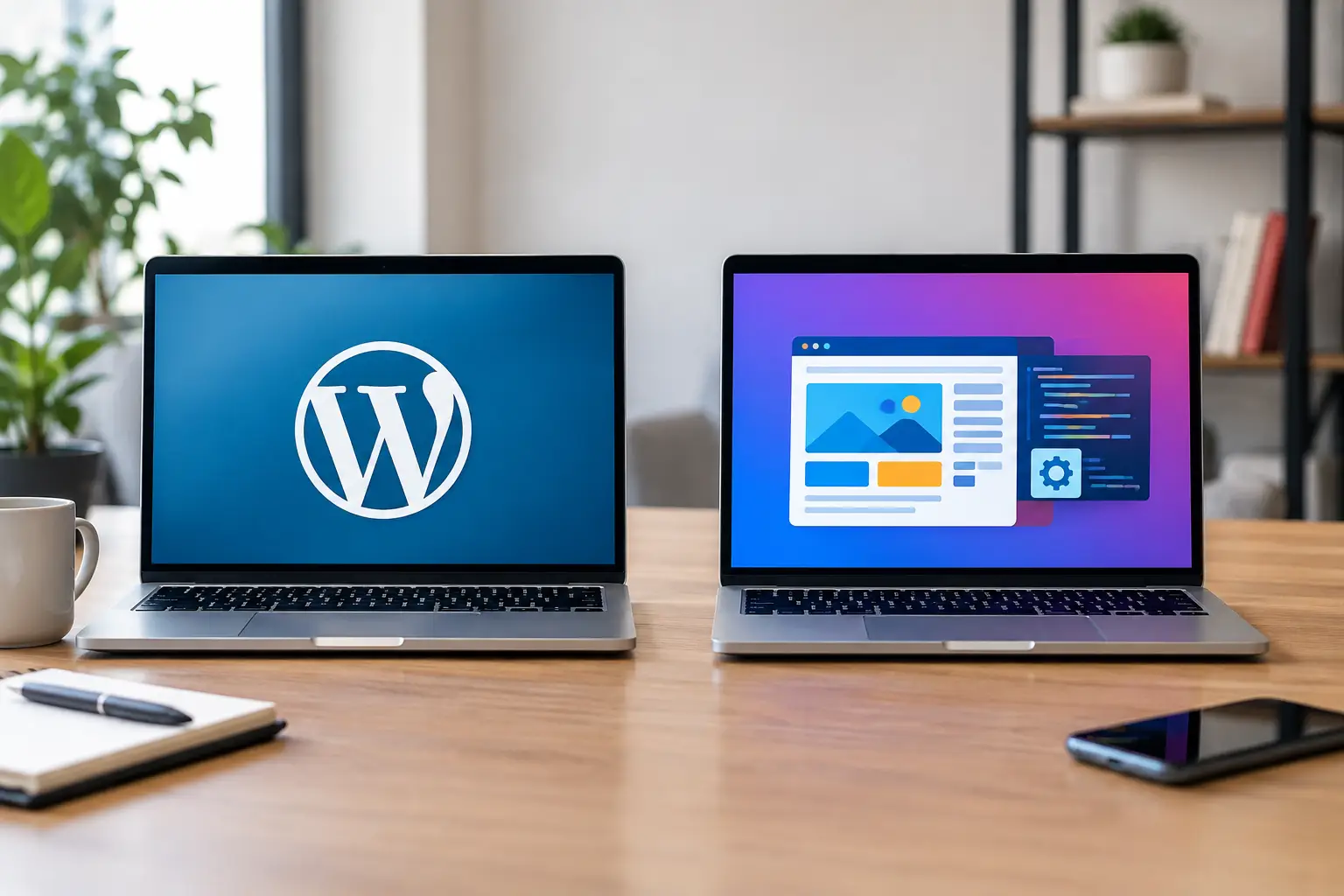
A website quote can look like a simple choice: a lower-priced WordPress build or a larger investment in a custom website. The real WordPress vs custom website decision is not about which option sounds more sophisticated. It is about which approach will support your marketing, operations and growth without creating unnecessary cost or complexity.
For many small to mid-sized businesses, WordPress is the sensible starting point. For others, particularly those with unusual workflows, customer portals or advanced integrations, a custom-built solution can be the better long-term investment. The right answer depends on what the website needs to do for the business, not just how it needs to look on launch day.
WordPress vs custom website: the commercial difference
WordPress is a content management system used to build and manage websites. It provides an established foundation for pages, blog posts, media, user access and many common website functions. A professional WordPress website can still be tailored to a business through custom design, carefully selected plugins and bespoke development where needed.
A custom website is generally built from the ground up using a tailored codebase and framework. Rather than adapting an existing content management platform, developers create the functionality around the organisation’s specific requirements. This may include a tailored administration area, unique data structures, complex calculators, booking logic, account areas or connections to internal systems.
The distinction matters because custom does not automatically mean better, and WordPress does not automatically mean basic. A well-planned WordPress site can be fast, polished and highly effective at generating enquiries. A custom site can be a poor investment if it solves problems the business does not have.
When WordPress is the right fit
WordPress works particularly well for service businesses that need to explain their offer clearly, build visibility in search results and generate qualified enquiries. Trades, professional services, health providers, consultants, property businesses and local operators often need strong service pages, location content, case studies, blogs, lead forms and straightforward conversion paths. WordPress handles these needs efficiently.
It is also a practical choice when staff need to update content internally. With a properly configured backend and some guidance, a team can publish a news item, update service information, add a team member or upload a case study without paying a developer for every small change. That control can keep website management costs reasonable over time.
From an SEO perspective, WordPress provides a solid foundation. It supports clean page structures, editable metadata, redirects, image optimisation, schema tools and content publishing. However, the platform itself will not improve rankings. Search performance comes from useful content, technically sound pages, clear site architecture, local relevance and ongoing optimisation. A neglected WordPress site will not outperform a well-managed custom site simply because of its platform.
WordPress also benefits from a broad support ecosystem. If your existing developer is unavailable, it is usually easier to find another experienced provider who can maintain, improve or troubleshoot the website. For a business owner, that reduces the risk of being locked into one supplier.
Where WordPress needs careful management
The flexibility that makes WordPress useful can create issues when a site is built carelessly. Too many plugins, poorly coded themes and cheap hosting can affect speed, security and reliability. Installing a plugin for every new request may feel convenient, but it can leave a site difficult to manage and more expensive to repair later.
Security is another responsibility. WordPress core, themes and plugins need regular updates, backups should be checked, and user access needs to be managed properly. These are manageable tasks, but they should be part of an ongoing website management plan rather than an afterthought.
There are also cases where WordPress becomes an awkward fit. If the website requires highly specialised functionality, forcing it into an off-the-shelf plugin can create performance problems or restrictive processes for staff. In that situation, custom development may be more cost-effective than repeated workarounds.
When a custom website earns its higher cost
A custom website is worth considering when the site is more than a marketing brochure. For example, a business may need customers to log in, view personalised information, submit complex applications, access documents, configure products or connect with a CRM, inventory platform or internal database in a very specific way.
Custom development can give the business greater control over functionality and performance because the system is built around defined requirements. There is less need to carry features that are not used, and developers can shape the user experience around a particular sales process or operational workflow.
This can be valuable for businesses where the website reduces manual administration. If a custom portal saves staff hours each week, improves data accuracy or makes a complicated buying process easier, the return may justify the upfront cost. The value comes from solving a genuine business problem, not from having a custom platform for its own sake.
A custom build may also be suitable for organisations with strict governance, accessibility or integration requirements. In these situations, it is important to document exactly what the system must achieve before development begins. Vague requirements are one of the fastest ways for a custom website budget to expand.
The trade-offs of custom development
Custom websites usually require a larger upfront investment and longer planning period. Every feature needs to be specified, designed, built, tested and maintained. A change that might take minutes in WordPress can require development time if the administration area has not been designed to support it.
Ownership also deserves close attention. Ask who owns the code, where it is hosted, how documentation will be provided and what happens if you change agencies or developers. A custom website should give you more control, not tie you more tightly to a single supplier.
Ongoing maintenance is still required. Frameworks, server environments and third-party integrations change over time. Security patches and compatibility updates do not disappear because the site was custom-built. Budgeting for this work protects the original investment and avoids rushed fixes later.
Compare total cost, not the launch price
The cheapest initial quote is rarely the full story. When comparing WordPress and custom website proposals, look beyond design and build costs. Consider content migration, hosting, maintenance, security updates, training, analytics setup, conversion tracking, SEO requirements and future enhancements.
A lower-cost WordPress website may become expensive if it is built on a bloated theme and relies on numerous paid plugins. Equally, a custom website may be poor value if a business only needs five service pages, a contact form and occasional content updates.
The better question is: what will this website cost to run and improve over the next three years, and what business value should it produce? A clear answer connects the decision to enquiries, sales efficiency, lead quality and internal time savings rather than aesthetics alone.
SEO, speed and conversion are not platform guarantees
Both WordPress and custom websites can perform well in Google Search and in newer AI-driven search experiences. Neither platform has a built-in advantage that replaces good marketing fundamentals.
For either option, the priorities remain similar: mobile usability, fast loading pages, logical navigation, well-written service content, clear calls to action, accurate business information and reliable tracking. A website should also make it easy for potential customers to understand why they should choose you, not just what services you offer.
For Brisbane and Australian businesses competing in local search, a considered website structure can support service area pages, Google Business Profile activity and targeted content without creating thin, repetitive pages. This is where web development and SEO strategy need to work together from the start.
A practical way to make the decision
Start by listing what the website must achieve in the next 12 to 24 months. Include marketing goals, customer actions, staff processes, required integrations and the content your team expects to update. Then separate essential functionality from ideas that are simply nice to have.
If the site is primarily focused on visibility, credibility and lead generation, a professionally built WordPress website will often provide the right balance of flexibility, cost and control. Invest the remaining budget in quality copywriting, SEO, Google Ads, analytics and ongoing improvements that bring the right visitors to the site.
If the website needs to become a core operational tool, custom development may deliver a stronger return. The key is to define the requirements carefully, phase the work where possible and choose a development partner that communicates openly about cost, risk and future maintenance.
The best website platform is the one that makes it easier to grow the business, measure results and respond to change. Choose the solution that fits your real requirements now, while leaving room for the next sensible step.