
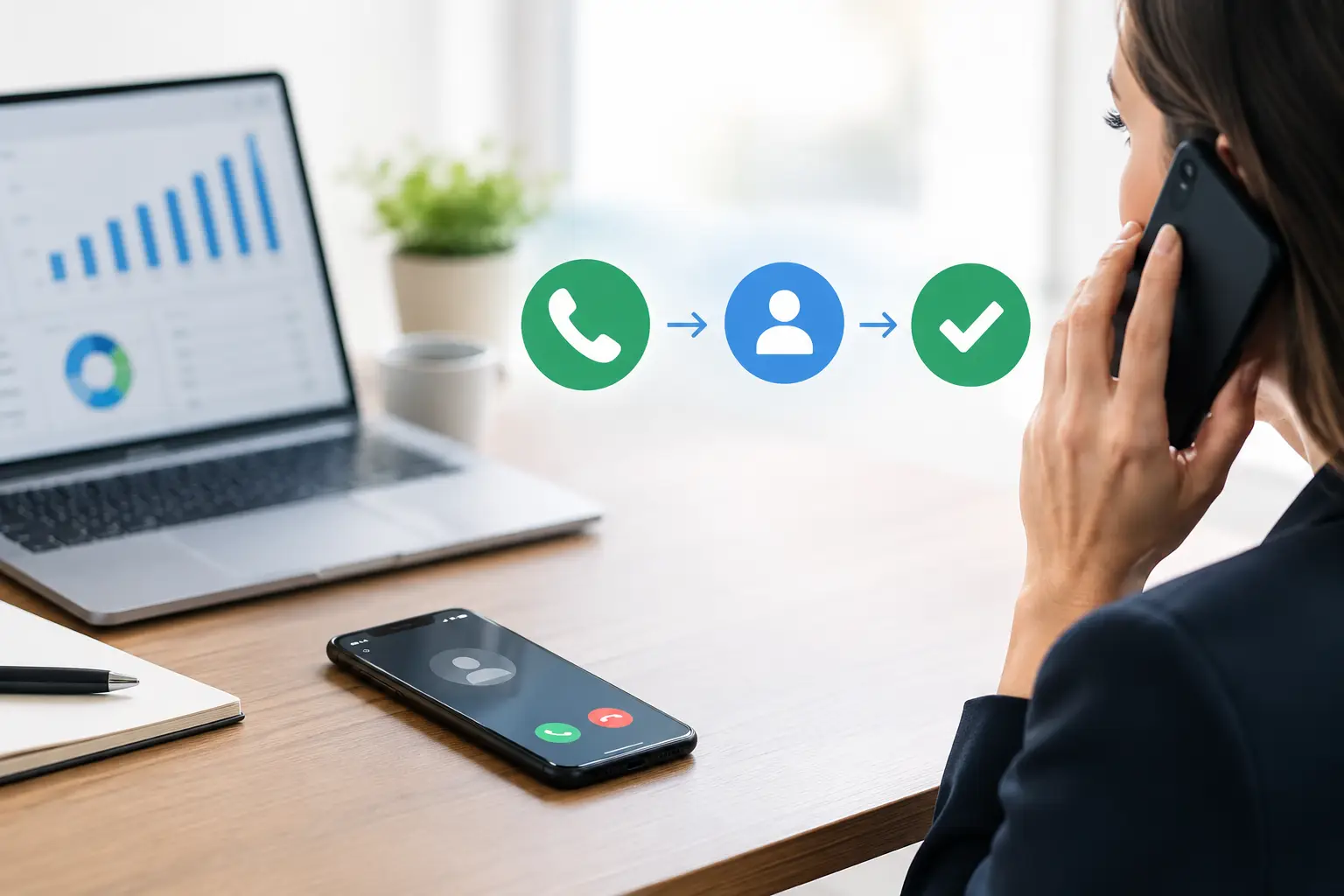
A phone enquiry can be the moment a prospective customer decides they are ready to act. Yet many businesses still track phone call conversions poorly, if at all. They can see clicks, impressions and form submissions, but have no clear view of which marketing activity made the phone ring.
That gap makes it difficult to judge marketing performance fairly. A Google Ads campaign may appear expensive when assessed on online forms alone, while actually generating high-value calls that lead to booked jobs, consultations or sales. Proper call tracking gives you a more complete picture of the enquiries your marketing is producing.
Why phone call tracking matters
For service businesses, calls often carry stronger buying intent than other enquiry types. Someone searching for an emergency plumber, legal advice, a local electrician or a specialist provider may prefer to call rather than wait for an email response. The same applies to businesses where the service is complex, high value or needs a conversation before a quote can be prepared.
Without call data, marketing decisions can become based on partial information. You may cut spend from a campaign that is producing qualified calls, invest more in traffic that generates low-quality enquiries, or underestimate the value of your Google Business Profile and organic search visibility.
Call tracking is not about inflating conversion numbers. It is about connecting marketing activity to genuine business opportunities. When configured well, it helps answer practical questions: Which keywords generate enquiries? Which ads prompt people to call? Are mobile visitors using the number on your website? Are calls becoming customers?
What counts as a phone call conversion?
Not every call should be treated equally. A two-second missed call, a supplier returning a message and a customer chasing an invoice should not carry the same weight as a new client enquiry.
Start with a definition that fits how your business operates. For many businesses, a useful call conversion is a new enquiry lasting longer than a chosen threshold, such as 30, 60 or 90 seconds. The right threshold depends on the service. A quick booking call may be valuable at 30 seconds, while a more considered professional service enquiry may need a longer conversation to indicate intent.
You can also separate calls by source and quality. A call from a Google Ads campaign is useful to measure, but the more commercial question is whether it produced a qualified lead, quote, booking or sale. This second layer usually requires input from the person answering the phone or from your customer relationship management system.
Set up the right tracking for each source
There is no single method that captures every phone enquiry. The best setup generally combines a few approaches, chosen according to your advertising activity, website traffic and internal processes.
Google Ads call reporting
Google Ads can report calls made directly from call assets in search ads, as well as calls made after visitors click through to your website. For website call reporting, a Google forwarding number can dynamically replace your usual phone number for visitors who arrived through an eligible ad click.
This approach is particularly useful for measuring paid search because it connects calls with campaign, ad group, keyword and device data. It also allows you to set a minimum call duration before a call is counted as a conversion.
There are limitations. Google Ads call reporting only attributes calls within its own advertising environment and may not be suitable as your only source of truth. It should be checked carefully, especially if phone calls are central to lead generation or your team uses several marketing channels.
Website call tracking numbers
A dedicated call tracking platform can use dynamic number insertion on your website. In simple terms, the platform displays a unique tracking number based on how a visitor arrived at the site. A person coming from organic Google search may see one number, while someone from a Facebook campaign or referral source sees another.
This gives broader attribution across SEO, Google Ads, social media, online directories and other channels. The caller is still routed to your regular business line, so their experience should remain straightforward.
Dynamic number insertion needs to be implemented correctly. The website must load the right number consistently, tracking scripts should not slow down the page unnecessarily, and the business name, address and main phone number should remain consistent in key local listings. Your standard business number should also be available in the site code or structured business information where appropriate, rather than being replaced everywhere without consideration.
Click-to-call events
On mobile, many visitors tap a phone number instead of manually dialling it. Tracking clicks on a tel: link through Google Analytics can reveal how often this happens. This is a useful engagement signal, especially for mobile-focused service businesses.
However, a click-to-call event is not confirmation that the conversation took place. The person may cancel the call or receive no answer. Treat it as an assisted metric unless it is paired with call tracking data that confirms a connected call and its duration.
Calls from your Google Business Profile
Your Google Business Profile can be a major source of local enquiries, particularly for Brisbane businesses competing in map results. Calls from the profile should be assessed alongside website and paid campaign calls, not ignored because they happen outside the website.
Google provides performance data that can indicate customer actions, including calls. A dedicated tracking number can sometimes be used in appropriate profile fields, but it must be handled carefully to preserve accurate local business information and avoid confusing customers. The priority is always a reliable customer experience and accurate business details.
Configure conversions around business value
Once call sources are tracked, configure conversion actions with intent in mind. For Google Ads, a call over your selected duration can be counted as a primary conversion if it represents a meaningful lead. Shorter calls, number clicks and general contact interactions may be better recorded as secondary conversions for observation.
This distinction matters when bidding strategies use conversion data. If every accidental tap is treated as a lead, automated bidding can optimise toward the wrong behaviour. If only high-quality calls are counted, the algorithm has a clearer signal – although smaller businesses may need enough conversion volume before automation performs reliably.
Use values where practical. A business that knows a qualified phone enquiry is worth approximately $150 in expected gross profit can assign a value that makes reporting more commercially useful. Do not invent precise figures if you do not have enough data. A simple, conservative estimate is better than false accuracy.
Connect calls to lead quality and revenue
Marketing platforms can tell you where a call came from. They cannot always tell you whether it became a customer. That information sits with your receptionist, sales team, booking software or CRM.
Create a simple process for recording the outcome of new enquiries. Staff might classify calls as qualified lead, existing customer, supplier, wrong number, booked appointment, quoted or won sale. Keep the process short enough that people will actually use it. A complicated spreadsheet with twenty categories usually creates inconsistent data.
Where systems allow, pass confirmed lead and sale outcomes back into your advertising platform. This closes the loop between the initial call and the actual commercial result. It is particularly valuable for campaigns with longer sales cycles, where the first conversation may not turn into revenue for weeks or months.
Call recordings can add useful context, but they come with privacy and legal responsibilities. If calls are recorded, ensure callers are appropriately notified, recordings are stored securely and access is limited to the people who need it. Businesses should obtain advice suited to their circumstances rather than assuming a generic setup covers every obligation.
Review the data without chasing vanity metrics
A high number of calls is not automatically good news. Review call volume alongside answer rates, duration, source, lead quality, cost per qualified lead and booked work. If paid ads generate many calls outside business hours that go unanswered, the issue may be ad scheduling or staffing rather than campaign quality.
Look for patterns over a meaningful period. One week can be distorted by weather, public holidays, seasonal demand or a single large job. Monthly review is often a sensible starting point, with closer monitoring when campaigns are new, budgets are substantial or performance changes sharply.
It also pays to listen to a sample of calls, where appropriate and lawful. Numbers alone may not show that a keyword is attracting people seeking a service you do not provide, or that callers are dropping off because the team cannot answer promptly. These findings often improve results faster than another round of superficial reporting.
Common call tracking mistakes
The most common mistake is counting every phone-number click as a lead. Another is relying only on Google Ads call data while overlooking calls from SEO, Google Business Profile visibility and other channels. Businesses also lose valuable insight when tracking numbers are set up but no one reviews call outcomes.
Be cautious about using too many numbers without a clear plan. Tracking should make attribution clearer, not make your business look inconsistent or create confusion for staff. The system also needs testing: make calls from different devices and sources, confirm they route correctly, and check that conversions appear in the expected reports.
For businesses running Google Ads and SEO together, a considered tracking framework can stop channels from competing for credit. DigiMedia Worx approaches this work as part of the wider lead-generation picture, so reporting reflects enquiries that matter to the business rather than just the easiest metrics to collect.
A well-tracked call is more than a line in an analytics report. It is evidence of what prompted a real person to start a conversation with your business. Make that evidence reliable, and your next marketing decision becomes far easier to justify.