
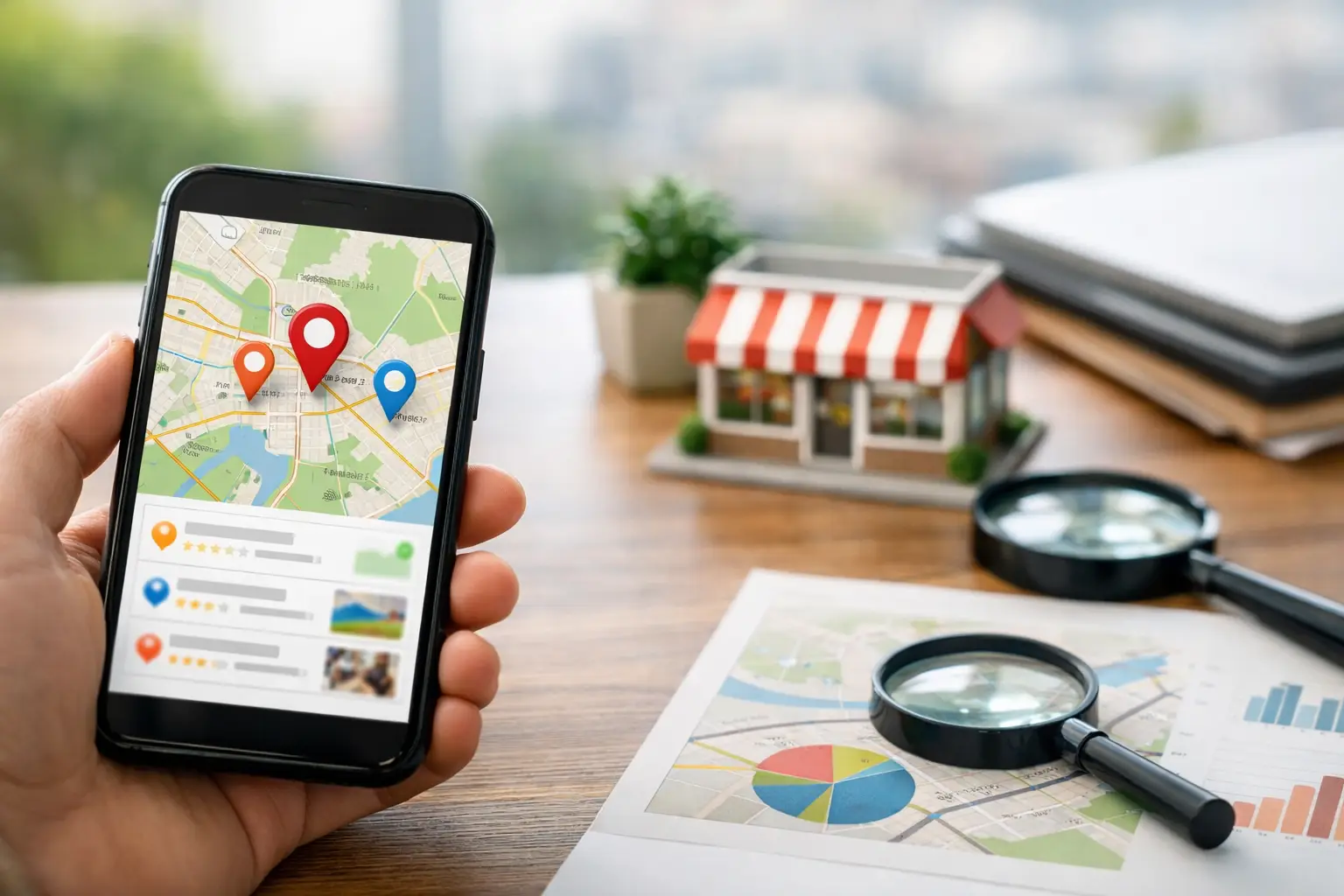
When a prospective customer searches “plumber near me” or “Brisbane accountant”, they are usually ready to compare, call or book. This local search ranking factors guide focuses on what helps your business appear at that high-intent moment – in Google Maps, the local pack and local organic results – without wasting effort on tactics that do not support real enquiries.
Local SEO is not about finding one shortcut. Google weighs a range of signals to decide which businesses best match a searcher’s need, location and level of trust. The right priorities depend on your industry, service area and competition, but the fundamentals are consistent.
How local rankings are decided
Google broadly describes local ranking around three areas: relevance, distance and prominence. These are useful commercial concepts, not a fixed checklist or a published scoring formula.
Relevance is how well Google understands that your business provides what the person searched for. A physiotherapy clinic with a clearly completed profile, service pages for relevant treatments and consistent business information gives Google more confidence than a profile with a vague category and a one-page website.
Distance is the proximity between the searcher or their stated location and the business. You cannot optimise a Brisbane business to outrank a genuinely relevant competitor beside the searcher in every suburb. Service-area businesses can still build strong visibility across their target locations, but they need realistic expectations about how proximity affects map results.
Prominence is the accumulated evidence that a business is established, trusted and recognised. Reviews, links, reputable mentions, local coverage and a well-performing website can all contribute. Prominence takes time to build, which is why sustainable local SEO generally outperforms quick fixes.
Local search ranking factors that deserve attention
A complete and accurate Google Business Profile
Your Google Business Profile is often the most visible local asset you own. It needs the correct business name, address or service area, phone number, website, trading hours and primary category. These details must reflect the real business, not a version designed to target extra keywords.
Category selection matters because it tells Google what you are. Choose the most specific primary category that accurately describes your core offer, then use secondary categories only where they genuinely apply. A general category may be appropriate for some businesses, but a precise category often gives Google clearer relevance signals.
Add services, products where relevant, a useful business description, current photos and attributes. Keep holiday hours updated. Incorrect opening times create a poor customer experience and can cost calls at the point of decision.
For businesses with a public premises, the address should be legitimate and staffed during the listed hours. For service-area businesses that work from home or travel to clients, hiding the address and setting an accurate service area is usually the right approach. Virtual offices and keyword-stuffed business names may create a short-term lift, but they put the profile at risk and undermine trust.
Reviews that are earned and managed properly
Review quality, quantity, recency and the way your business responds can influence customer choice and support local visibility. The priority is not simply collecting the highest possible number. A steady flow of genuine reviews that mention specific services and customer experiences is more credible than a sudden batch of generic five-star ratings.
Build a simple request process after a successful job, appointment or delivery. Make it easy for customers, but never offer incentives in exchange for reviews or pressure people to change their feedback. Those approaches can breach platform policies and produce poor-quality signals.
Respond to reviews professionally, including negative ones. A calm response that acknowledges the issue and offers a path forward demonstrates accountability to future customers. Do not disclose personal details or argue publicly. For small businesses, review management is as much a reputation process as an SEO task.
A website that supports the local result
A Google Business Profile is not a replacement for a credible website. Google uses website content and authority to understand your services, locations and expertise, while customers use the site to decide whether to contact you.
Each core service should have a clear, useful page that explains who it is for, what is included, likely outcomes and how to enquire. If you serve particular areas, mention them naturally where there is genuine relevance. A page for “commercial electricians in the Gold Coast”, for example, should contain real information about that service and area, not the same copied paragraph with a suburb name swapped in.
Make essential contact details easy to find and keep your name, address and phone number consistent with your profile. For businesses with multiple locations, give each legitimate location its own useful page. Include local proof where available, such as case studies, team details, project photos or service-specific testimonials.
Technical performance still matters. A mobile-friendly site that loads quickly, is easy to navigate and has reliable enquiry forms is more likely to convert the traffic you earn. Rankings are not the only measure of success if customers cannot call, submit a form or understand what you offer.
Local authority and relevant mentions
Links and mentions from reputable websites remain valuable because they can signal authority and local standing. The strongest opportunities are usually connected to the real business: local industry associations, chambers of commerce, suppliers, community partnerships, sponsorships, local events, professional directories and news coverage.
Do not buy low-quality links or pay for large bundles of generic directory listings. These tactics are often easy to spot, provide limited commercial value and can leave a website with a poor-quality backlink profile. One genuine mention from a respected local organisation can be more useful than dozens of irrelevant listings.
Citations – references to your business name, address and phone number on third-party websites – also help reinforce business consistency. They are rarely the factor that transforms rankings on their own, particularly in competitive markets. Treat them as foundational housekeeping: claim significant listings, correct errors and avoid chasing every directory available.
Engagement and conversion signals
Google does not publish a simple formula saying that clicks, calls or direction requests directly raise local rankings. Still, a listing that helps customers act is a better business asset than one that only receives impressions.
Use accurate categories, strong photos, clear descriptions and current information to make the profile useful. On your website, write clear calls to action, display key trust signals and remove friction from contact forms. This improves the return from local traffic, whether it changes a ranking signal or not.
What changes by business type
A local retailer, restaurant or clinic with a physical location should focus heavily on its mapped premises, accurate hours, photos and nearby customer experience. The closer a searcher is, the more distance can influence the result.
A trades business, consultant or mobile service provider has a different challenge. It may serve many suburbs but operate from one base. Creating a separate profile for every service area is not a legitimate solution. Instead, build authority around the real business location, clearly define the service area and create useful service and area content where it reflects actual work.
Competitive pressure also changes the plan. In a small regional market, profile accuracy, reviews and a sound website may deliver meaningful gains quickly. In Brisbane, Sydney or Melbourne, established competitors may have years of reviews, strong websites and recognised local brands. In those cases, consistent execution and a sharper service proposition matter more than constantly changing keywords.
Common local SEO mistakes
The most costly mistakes tend to come from treating local search as a set-and-forget channel. Businesses often leave outdated hours online, use different phone numbers across platforms, choose broad categories, ignore reviews or publish thin suburb pages that provide no value.
Another common problem is measuring only ranking position. Local results vary by suburb, device, search history and the wording of the query. A number-one result seen from your office may not be the result a customer sees ten kilometres away. Track rankings across meaningful locations, but pair them with calls, form enquiries, direction requests, booked work and revenue where possible.
Be cautious with promises of guaranteed map-pack positions. No agency controls Google’s results, and anyone who claims otherwise is selling certainty that does not exist. A better partner explains the work, reports clearly and connects activity to business outcomes.
A practical way to prioritise local SEO
Start by auditing your Google Business Profile and website for accuracy, relevance and conversion issues. Then establish a reliable review process, correct major citation inconsistencies and improve the service pages that support your most valuable enquiries. Once the foundations are in place, invest in local authority through genuine relationships, useful content and ongoing profile maintenance.
Use reporting to identify what is working. Track calls and form leads by source, review search terms where available, monitor visibility across priority suburbs and assess lead quality with your sales team. Google Ads can also complement SEO while organic visibility develops, especially for competitive services where immediate lead volume matters.
Local search works best when it reflects the business customers will actually find after they click: clear services, fair communication, reliable delivery and proof that others trust you. Put that substance online consistently, and your local visibility has a far stronger foundation to grow from.