
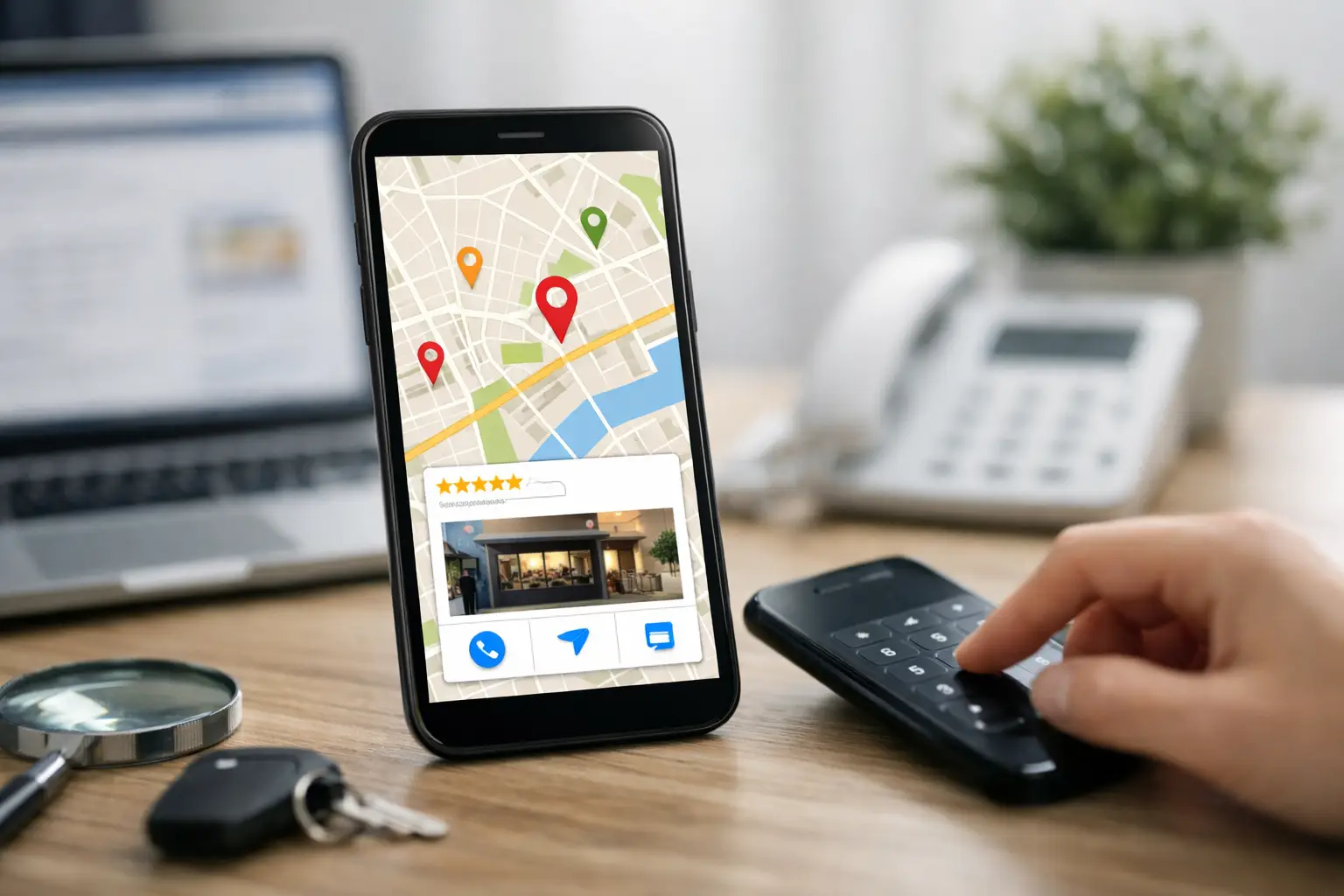
A potential customer searching for an electrician, accountant, clinic or local supplier often makes a decision before they reach a website. They see the map result, scan the rating, check the opening hours and either call, request directions or move on. That is why Google Business Profile optimisation is not an admin task. It is a practical part of generating qualified local enquiries.
For small and mid-sized businesses, the profile is frequently the first point of contact with a ready-to-buy customer. A complete, credible listing helps Google understand what you do and where you operate. More importantly, it gives people enough confidence to take the next step.
What Google Business Profile optimisation is designed to achieve
Google Business Profile optimisation is the ongoing work of improving a business listing so it is accurate, useful and competitive in Google Search and Maps. The aim is not simply to appear more often. It is to appear for relevant local searches and turn that visibility into calls, website visits, direction requests and enquiries.
A well-managed profile supports local SEO, but it cannot replace a sound website, clear service pages or a broader search strategy. Google looks at a range of signals when deciding which local businesses to show, including relevance, distance and prominence. You cannot control every factor, particularly a searcher’s location, but you can remove uncertainty from the information you provide.
The strongest Google Business profile reflect the real business. They use the correct name, category, service information, hours, contact details and imagery. They also show evidence that customers have had a positive experience through genuine reviews and thoughtful responses.
Start with information customers can rely on
Accuracy is the foundation. An incorrect phone number, outdated trading hour or old address on a Google business profile can cost an enquiry and damage trust quickly. It can also create confusion when Google finds conflicting business details elsewhere online.
Claim and verify the Google business profile, then ensure the business name matches the name used on signage, invoices and the website. Avoid adding suburbs, service keywords or promotional claims to the business name unless they are genuinely part of the registered trading name. Keyword-stuffed names may look tempting, but they create a poor customer experience and can lead to edits or suspension.
Choose the primary category carefully. It should describe the core service or business model, not every service you would like to rank for. A Brisbane landscaping business, for example, may use a primary category that best reflects its main offering, then add relevant secondary categories where they accurately apply. Categories influence the features Google makes available and the searches for which the profile may be considered.
Complete the address or service area based on how the business operates. A customer-facing premises should display a correct physical address. A mobile or home-based service business that visits customers should generally use service areas rather than publishing a private address. List realistic areas you actively serve, rather than attempting to cover every suburb in a capital city.
Add the website, phone number, opening hours and special hours for public holidays. If bookings are accepted, use the relevant booking option only when it leads to a reliable process. Every field should make it easier for a customer to act, not send them into a dead end.
Write services for people first
Google business profile service descriptions give useful context, especially for businesses with specialised work. Use plain language that explains what is offered, who it is for and any meaningful distinction. A commercial painter might list office repainting, strata maintenance and retail fit-outs rather than repeating “best painter Brisbane” throughout the profile.
Where appropriate, add individual services and products with clear names and descriptions. This can help potential customers assess fit before they call. Keep prices current if you choose to display them. For custom work, a “from” price or a request-for-quote approach is often more honest than a fixed figure that does not reflect the final scope.
Build confidence with reviews and current proof
Reviews are one of the clearest trust signals in a local result. Customers use them to assess quality, responsiveness and consistency, particularly when comparing several businesses with similar ratings. A steady flow of genuine recent reviews is usually more valuable than a short burst followed by silence.
Make requesting a review part of the customer process. Ask once a job is complete or a positive outcome has been delivered, and make the request straightforward. Do not offer discounts, gifts or other incentives in exchange for reviews. Do not pressure customers to write a five-star review, and never create reviews on their behalf.
Respond to reviews with care. Thank positive reviewers specifically where possible, without sharing private job details. For negative feedback, acknowledge the concern, remain professional and offer a sensible way to resolve the issue offline. A defensive response can deter future customers even when the original complaint is unfair.
Photos matter because they reduce uncertainty. Use clear, recent images of the team, premises, completed work, vehicles, products or service process. For trades and project-based businesses, before-and-after photos can be effective when they genuinely show the work completed. Avoid generic stock imagery where possible. A customer wants to see the business they are considering, not a polished but anonymous substitute.
Posts can also be useful for time-sensitive updates, seasonal services, events or offers. They should support a current business objective, not become another channel that is updated once and forgotten. If you cannot maintain regular posts, prioritise accurate core information, reviews and photos first.
Match the Google buisness profile to the searches that bring good leads
Local visibility is not about putting the same keyword into every field. It comes from building consistent relevance across the profile, website and wider online presence. Consider the terms customers use when they have a real need, then make sure the business can clearly meet that need.
For example, a plumbing business may want work from emergency call-outs, hot water repairs and blocked drains. Its profile should accurately describe those services, while the website should provide useful pages that explain each service, coverage area and contact path. This makes the customer journey clearer and gives Google stronger context.
Location pages and suburb references need the same discipline. Mention locations where the business has a genuine presence or service capability. Creating thin pages for dozens of areas, or adding every suburb to a profile description, rarely creates sustainable results. It can make the message less useful to the people you are trying to reach.
Consistency also matters beyond Google. Check that the business name, address and phone number are aligned across the website, social profiles and reputable online directories. Small discrepancies such as an old suite number or disconnected mobile can undermine confidence and create avoidable work for customers.
Measure actions, not just Google business profile map visibility
A profile that receives more views is not automatically performing better. The meaningful question is whether it is helping the business attract the right actions. Review calls, website clicks, direction requests, booking interactions and message activity where available, then compare patterns over time.
Use website analytics to understand what happens after a visitor clicks through. Are profile visitors submitting an enquiry form, calling from mobile, viewing key service pages or leaving immediately? Tracking should be configured with privacy and consent requirements in mind, but it should still give the business a practical view of lead quality.
A rise in calls may be a positive result, but context matters. If most calls are outside service areas, unrelated to the business or asking for work you do not offer, the profile and website may need clearer qualification. Better marketing is not always about increasing volume. Often, it is about reducing wasted enquiries while improving the quality of the opportunities that reach the team.
A sensible maintenance rhythm
Set aside time each month to check the profile for customer-suggested edits, unanswered reviews, changed hours, new photos and service updates. Review performance quarterly alongside website traffic, enquiries and paid search activity. This prevents the listing becoming inaccurate while keeping decisions tied to commercial outcomes.
Be cautious with anyone promising guaranteed map rankings. Local results change by search location, competition, category and customer behaviour. Good optimisation improves the odds by making the business more relevant, credible and easy to contact, but it is not a switch that produces instant top placement.
For businesses that need support across local SEO, Google Ads and website conversion, DigiMedia Worx approaches the Google business profile as one part of a connected growth strategy. The right next step is usually simple: make it easier for the right local customer to find clear information, trust what they see and contact you without hesitation. For more information on setting up your Google Business Profile get in touch today.